
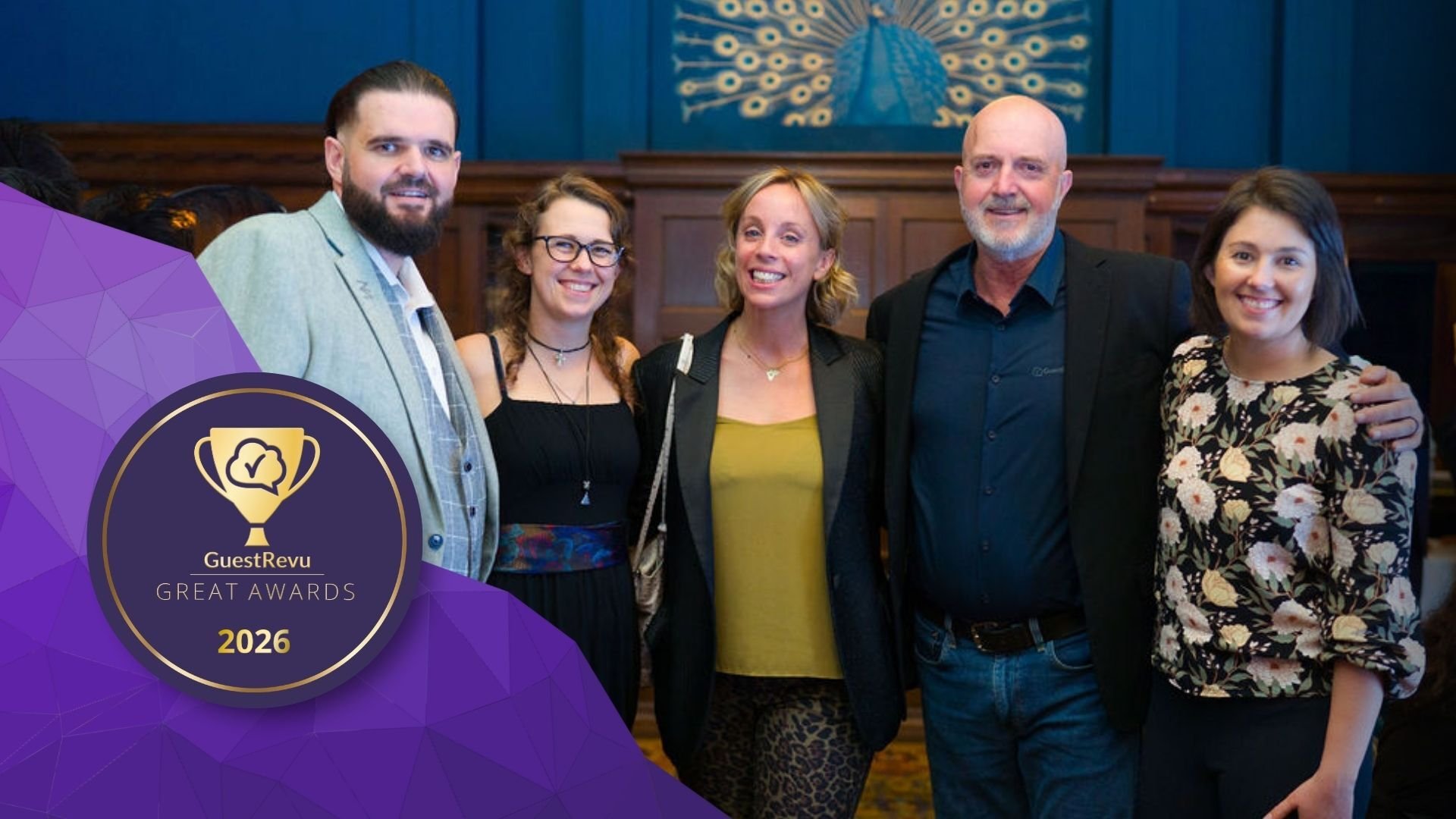
The GuestRevu GREAT Awards ceremony in London was about far more than just awards and champagne. The event sparked lively, relevant discussions for the hospitality industry, bringing together refreshingly candid perspectives across two engaging panel sessions.
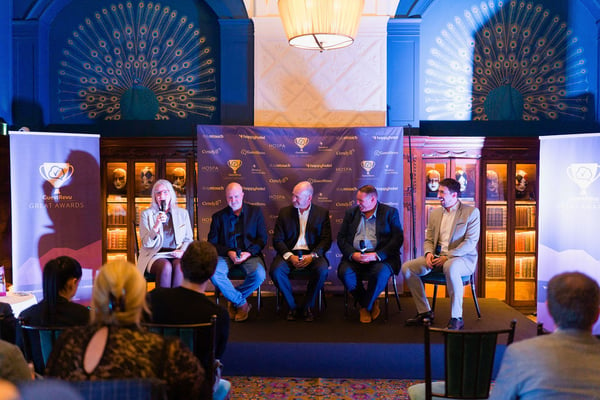
The first session was the Spicy Panel, where a hotelier, a hospitality consultant, and a hotel guest took to the stage to tackle a critical question facing the industry: are we overcomplicating hospitality with technology?
Meanwhile, the second session — the Data Panel — focused on how guest feedback, review management, and smarter data application can improve the overall experience, strengthen brand reputation, and ultimately drive revenue.
Below are the key takeaways from these insightful discussions.
Key takeaways
Spicy Panel
- Liutauras (LV) Vaitkevicius, Apex Alliance Hotel Management
- Eljesa Saciri, The Mandrake
- Julian Tee, Compass Hotels Management Limited
- Patricia Gail, World Traveller

1. More technology doesn't always mean better hospitality
The discussion kicked off with a provocative question: does the hospitality industry overcomplicate things, investing in the latest systems, collecting endless amounts of data and chasing innovations without always knowing what to do with them? And does any of that actually matter to guests?
Eljesa Saciri, Managing Director at The Mandrake, shared how The Mandrake in London had completely rebuilt its technology stack, replacing outdated systems that weren't communicating effectively with one another.
“If you've got systems that are breaking down, that are falling apart, that are not speaking to each other, if I'm having to capture data from a multitude of sources that actually doesn't match up, for me that's failed. That's failed technology, but that's also people failing the business. Because you haven't put enough into the business to ensure that these systems are doing exactly what they need to.”
– Eljesa Saciri, Managing Director, The Mandrake
The result of her work on The Mandrake's tech was better usability, easier access to information and more efficient operations… and not a single guest noticed the change. But, as LV correctly pointed out, that's exactly the point.
Technology is far more than a buzzword or a tool solely for operational efficiency. Julian Tee, Founder and Director of Compass Hotels Management Limited, also emphasised that technology and data are now paramount for attracting guests, driven by fundamental shifts in modern consumer purchasing behaviour.
“But the way that the world's moving and the way that consumers are buying and the way that we are trying to sell our wares demand technology, demand data. And so without it and without the systems and processes and people – people, importantly – to process that, I think we're lost.”
– Julian Tee, Founder and Director, Compass Hotels Management Limited
As the panel discussed, collecting data for the sake of collecting data is pointless. What matters is how hotels use that information to improve the guest experience.
2. What guests really want
One of the panel's most interesting moments was hearing directly from Patricia Gail, a hotel guest who offered a refreshingly simple take on what makes a great stay. While hoteliers debate digital check-ins, automated services and in-room technology, Patricia's priorities were much more straightforward: a friendly face, a warm welcome and knowing there's someone available to help when something goes wrong: “It's just that feeling of sort of, okay, there's somebody. I don't want to automate it.”
She shared an example of a booking problem during a trip to Germany. After struggling with an online booking platform, she called the hotel directly. A staff member sorted out the reservation, offered a better rate and even followed up during her stay. That personal interaction turned a frustrating booking experience into a memorable one and gave her a reason to book directly with the hotel in the future.
The discussion also highlighted that different guests have different expectations. Some want a digital key and the quickest possible check-in. Others value a conversation at reception and a personal goodbye at checkout. The secret isn't choosing between technology and human interaction. It's understanding when each one adds value.
3. When technology gets in the way
As we all know, technology doesn't always make life easier (unfortunately). The panel questioned whether hotels have become too dependent on systems, particularly when those systems create unnecessary barriers between staff and guests.
Liutauras (LV) Vaitkevicius, CEO of Apex Alliance Hotel Management, shared a common situation: arriving at a hotel you've visited before, only to be asked whether it's your first stay while the receptionist spends several minutes typing away at a computer. If technology is supposed to help hotels recognise returning guests and deliver more personalised experiences, shouldn't it make those interactions easier?
Another debate centred on what hoteliers should do when technology fails. The panel agreed that staff must be better trained rather than relying solely on automated systems. Julian Tee pointed out: “We only focus on modern systems. It's still a people industry. You lose that focus on manual. You lose that focus on hospitality, that focus on being able to talk to people, skill set at your peril.”
The takeaway was clear: technology should enable hospitality, not dictate it. Hotels still need well-trained people who can think independently, solve problems and connect with guests, whether the Wi-Fi is working or not. A genuine smile or a thoughtful gesture can not be replaced.
4. The review paradox: Are hotels hearing from the right guests?
Perhaps the spiciest part of the discussion came when the conversation turned to online reviews. Patricia admitted something many travellers can probably relate to: she's most likely to leave a review when an experience has been exceptionally good or particularly bad. When everything goes as expected, she doesn't necessarily feel the need to say anything.
This sparked an interesting debate about whether public review platforms always capture the full picture of guest satisfaction. A hotel's most loyal guests might never leave a public review. Meanwhile, guests with particularly strong opinions are often the ones making their voices heard.
So, how do you make sure you're listening to all your guests? The panel highlighted the value of proactively collecting feedback through personalised guest surveys rather than relying exclusively on reviews left on Booking.com, Google or Tripadvisor.
For Eljesa, making those surveys feel like a natural extension of the hotel's identity was particularly important.
“Because depending on who you are as a brand or what you are as a brand, how you sell yourself and the language that you use to sell yourself is critical. [...]This is the brand. This is where we've stayed. Not some generic template. ” – Eljesa Saciri, Managing Director, The Mandrake
By creating opportunities for guests to share their experiences directly through surveys, hotels can gather more representative feedback, understand what their guests truly value and identify problems that might otherwise go unmentioned.
Data Panel
-
Dr Wouter Hensens, Stenden South Africa
-
Chris Alexandre, GuestRevu
-
Erich Schuster, Cendyn
-
John Halligan, Stayntouch
-
Jane Pendlebury, HOSPA
1. What counts as a good score depends on your market
If you had an 88 % positive review of your hotel, would you be happy? That’s the question asked to start the Data Panel. Even if the majority of hoteliers answered yes, it might not be enough. With the average score among the evening's award entrants and winners sitting at an impressive 89.48%, the bar was certainly high.
But as Dr Wouter Hensens, Executive Dean of Stenden South Africa and research partner for the awards, explained, a good score depends on the type of property and the expectations of its guests. While 85% might be perfectly respectable for a three-star hotel, luxury properties should be aiming above 90%.
It's about consistently meeting (and ideally exceeding) the expectations you've set. “It's all about meeting expectations of the guests that are coming in.”, says Chris Alexandre, CEO and Founder of GuestRevu. In fact, panellists joked that a truly perfect score doesn't exist – if a hotel has 100%, someone is either hiding negative feedback or making reviews up.
2. Don't wait for a bad review to find out something went wrong
One of the strongest takeaways from the discussion was the importance of collecting feedback before unhappy guests take their frustrations to public review platforms. Dr Wouter highlighted recent research showing a strong relationship between hotels that use guest surveys and higher online review scores: “So hotels that run surveys automatically score substantially higher.”
While the research couldn't establish direct causation, it reinforced the value of proactively asking guests about their experiences rather than simply waiting for reviews to appear. This is where in-stay surveys and immediate post-stay surveys can make a real difference.
Hotels can identify problems and resolve them before checkout. And when feedback arrives immediately after a stay, a quick, personal response can turn a disappointing experience around before it becomes a negative review on Google, Booking.com or Tripadvisor.
As the panel discussed, guests understand that things sometimes go wrong and what matters is how the hotel responds.
“ [...] The person that is investigating your hotel definitely looks not just at the reviews, but especially at how you respond to those reviews. And if you're either very funny or very humble, one of the two, that's going to make them decide to book. They're going to say, well, actually, that was an issue for that guest. It's not necessarily going to be an issue for me.” – Dr Wouter Hensens, Executive Dean, Stenden South Africa
3. Technology should enhance the human touch, not replace it
While technology and data are essential, hospitality will always be about people. As Chris Alexandre explained, the purpose of collecting guest data isn't simply to generate reports or track scores. It's to give hotel teams the insights they need to create better, more personal experiences.
“I think the systems and the data are really important. We can't live without it. But what we have to do is start to use the systems and the data in a way that enhances the human element of hospitality.” – Chris Alexandre, CEO and Founder, GuestRevu
The panel shared examples of how seemingly small gestures can leave a lasting impression: recognising returning guests, offering an early check-in when possible, or remembering a previous guest's preference for a quieter room. These are the details that make guests feel seen and valued.
Jane Pendlebury, CEO at HOSPA, emphasises how smaller hotels master personalisation, which leads to more reviews:
“How the smaller the hotel, the more reviews they get.[..] perhaps its smallness and its personal interaction makes it, makes the people want to give reviews more.” – Jane Pendlebury, CEO, HOSPA
And while these small gestures may come more naturally in smaller properties, the right systems can help larger hotels deliver that same level of personalisation. The best hospitality technology enhances human connection rather than getting in its way, giving staff more opportunities to deliver memorable experiences.
As Erich Schuster, Enterprise Sales Director EMEA at Cendyn, and John Halligan, Regional Director of Sales at Stayntouch, highlighted, it is the staff who make a stay truly special. Recognising returning guests, offering personalised services, and paying attention to reviews that mention team members are all key ways to maintain that essential human touch.
4. A review management strategy is a business strategy
A hotel might be meeting its revenue targets today, but if guest satisfaction is declining, those numbers may be hiding problems that will affect future performance. Dr Wouter described financial results as a lagging indicator, while guest satisfaction and loyalty help shape what happens next. Declining review scores can eventually make it harder to maintain room rates, attract bookings and encourage repeat visits.
To keep increasing and consistently exceeding revenue targets, hoteliers must look beyond financial metrics and pay attention to what guest feedback is telling them.
“In my mind, a good revenue manager also has an eye on your review data and will actually tell you: Listen, your reviews are getting too low. I can't sustain the rate with these reviews. You need to up your game. Finance is basically a lagging indicator. There's a lot of stuff that happens, and finance is the end result.” – Erich Schuster, Enterprise Sales Director EMEA, Cendyn
That's why having a proactive review management strategy is so important. It's not enough to occasionally check your overall rating or respond to a particularly negative comment. Hotels need to consistently collect feedback, monitor trends across review platforms, respond to guests and, most importantly, turn what they learn into operational improvements.
The panel also explored how AI is making this process even more valuable. Chris shared an example of a hotel group where AI-powered analysis uncovered recurring complaints about car park lighting and security, issues that hadn't appeared in the hotel's usual reports or survey questions. By analysing large volumes of guest comments, AI can reveal patterns that might otherwise go unnoticed, helping hotels identify emerging problems before they become bigger issues.
“We take that whole review, and we feed it into the AI engine and over many, many reviews, AI starts to identify trends that are coming out of those reviews that the hotels are completely unaware of because they come out of the comments, and so it starts to amalgamate and pull all of those together.” - Chris Alexandre, CEO and Founder, GuestRevu
5. From guest satisfaction to guest loyalty
The panel closed with another important question: who really owns the guest relationship? With online travel agencies making booking so convenient, even loyal guests may continue reserving through third-party platforms rather than booking directly with the hotel.
The challenge for hoteliers is to give guests a compelling reason to return and book direct, whether through a more seamless booking experience, meaningful benefits or the kind of personalised service that makes them feel recognised.
Ultimately, the discussion brought everything back to one central idea: guest feedback is much more than a score. It's an opportunity to understand what guests value, identify where improvements are needed and build stronger relationships. When hotels combine the right data, technology and human touch, better reviews become the natural result of better hospitality.